
Common Mistakes to Avoid When Planning Your First Coral Reef Dive Trip
Ten planning errors that turn a first coral reef dive trip into an expensive lesson, from unchecked operator credentials to badly timed flights home.
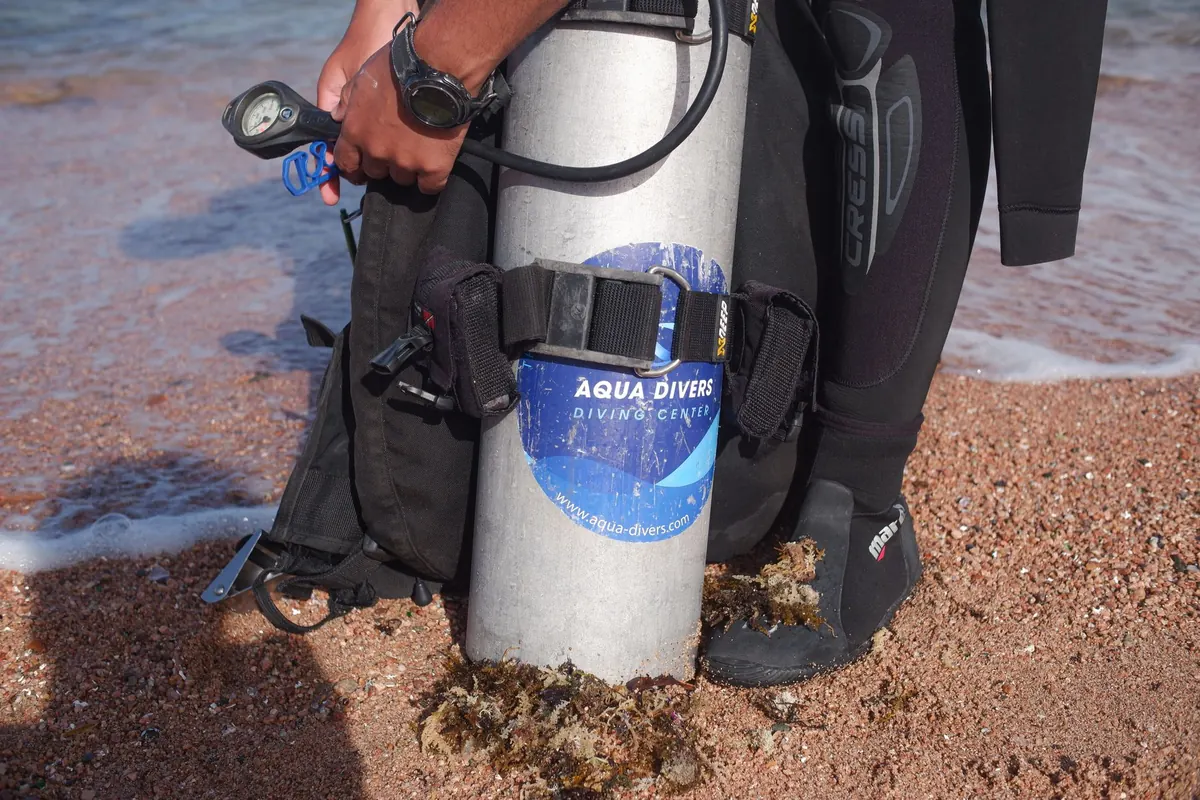
Your first coral reef dive trip sits in an awkward, wonderful spot. You are qualified enough to get in the water, and new enough that everything still feels enormous. That combination is exactly when a few small planning mistakes cost the most, because you have no experience to fall back on when something does not add up. None of these errors are dramatic. They are the quiet ones: a boat booked on price, a reef visited in the wrong month, a flight taken too soon after the last dive.
Booking an operator you know nothing about
A shop that sells dive trips and a proper dive centre are not the same thing. Some outfits are little more than a booking desk that subcontracts to whoever is free that morning. On a reef you have never seen, with currents you do not know, that matters more than the price difference.
Check the credentials before you pay a deposit. Look for an affiliation with a recognised training agency, ask who will actually be guiding you, and read recent reviews rather than the polished blurb on the homepage. Then ask a few direct questions by email, so you have the answers in writing:
- Which training agency are the instructors certified with, and is the centre insured?
- Does the boat carry oxygen and a properly stocked first-aid kit, and is someone aboard trained to use them?
- What is the maximum number of divers per guide?
- Is the vessel licensed, and does it carry a radio, life jackets and a means of calling for help?
- When was the compressor last tested for air quality?
If a centre is vague about any of this, that is your answer. A cheap trip that skips safety equipment is not a bargain.
Missing the season, the swell and the tides
"Best time to visit" is not one date for the whole destination. Reefs have wet and dry seasons, monsoon windows, plankton blooms that drop visibility to a grey haze, and coral spawning weeks when the water comes alive. Water temperature swings too, and a 3mm shortie that felt fine in one month is miserable in another.
Ask specifically about the site you plan to dive, not the country. Wind direction matters as much as wind speed, because a sheltered west coast can be flat calm while the east side is un-diveable. Spring tides and full moons often mean stronger currents, which is fantastic on some sites and unsuitable for a new diver on others. If you are travelling for a particular animal, check what is actually in season rather than what appears on the tourism board's poster.
Training gaps that only show up in the water
Skipping a refresher
If it has been a year or more since your last dive, book a refresher before the main trip. It is usually an afternoon, and it removes the first-day panic of remembering how your kit goes together while a boat waits.
Buoyancy before depth
Most reef dives sit somewhere between 10 and 25 metres, and many walls and drift sites suit an Advanced Open Water certification. More importantly, good buoyancy protects the reef and your air consumption. A buoyancy session or a Nitrox course, which gives you more no-decompression time, is worth far more than an extra day of guided dives.
Treating the reef as scenery
Coral is a living animal, and it is slower to recover than you might imagine. A fin kick that snaps a branch of staghorn takes years to regrow. Keep your kit streamlined so nothing dangles, resist the urge to kneel on the sand for a photograph, and never hold on to coral while you sort out your buoyancy. Gloves are banned on many tropical reefs anyway, largely for this reason.
Look, photograph, drift past. If you cannot hover still, practise until you can.
Cover up with a rash vest rather than relying on sunscreen, and choose a reef-safe formulation if you do use it.
Rushing the travel and money side
Insurance that does not actually cover you
Many standard travel policies exclude scuba diving, or cap cover at a shallow depth, or exclude unguided dives. Read the wording and buy specialist dive cover if you need it. On health and insurance questions, take proper professional advice rather than relying on a forum thread.
The flight home
Do not book a flight for the morning after your last dive. Most agencies advise waiting at least 18 to 24 hours, and 24 hours is the safer default. A final night on land also gives you a buffer if a boat is delayed by weather.
Hidden costs
Marine park fees, equipment rental, Nitrox fills, tanks and weights, transfers and tips are often quoted separately. Ask for the total before you commit, and confirm whether tanks and weights are included in the advertised price.
Packing the wrong things
Bring your own mask if you have one, because a leaking rental mask ruins dives faster than anything else. A well-fitted wetsuit beats a new one. Take your certification card or digital equivalent, a logbook, and spare straps and O-rings. Leave the heavy camera until you can hover without thinking about it.
A quick checklist before you book
- Confirm the operator's agency affiliation, insurance and safety equipment.
- Check the conditions for your specific dates and site.
- Book a refresher or buoyancy session if either is due.
- Read your insurance policy for depth limits and exclusions.
- Leave at least 24 hours between your last dive and your flight.
- Ask for an all-in price, then compare.
Do those six things and your first reef trip becomes what it should be: a week of learning where the fish are, how the light changes at 18 metres, and how much better your buoyancy gets by day five. The reefs will still be there next year. Plan so that you are welcome back.
Photo: Hossam Ashoor / Pexels